
Strategic Outlook
- Growth Potential: The micro EV segment is set to expand rapidly, driven by urban congestion, environmental regulations, and technological advancements.
- Innovation Focus: Emphasis on lightweight design, battery swapping, IoT features, and autonomous integration will define the next generation of microcars.
- Market Barriers: Cost, safety, and consumer acceptance remain challenges; regulatory support and technological progress are essential to overcoming these.
- Environmental Impact: Widespread adoption of micro EVs can substantially reduce urban emissions and improve air quality, aligning with global sustainability goals.
Micro EVs transition ownership from private to shared models, facilitated by technological advances, regulatory support, and innovative business models like Battery-as-a-Service (BaaS).
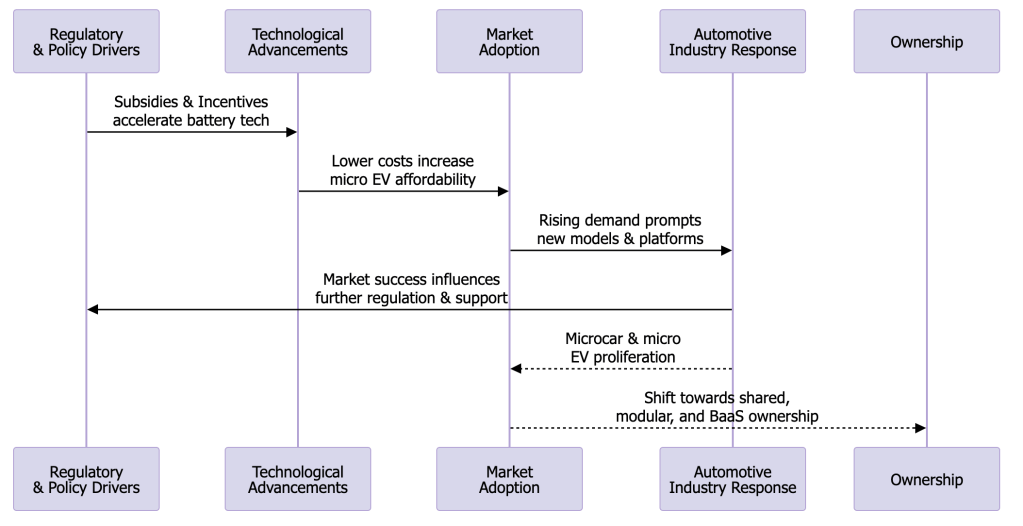
Policy incentives and technological progress synergistically drove market adoption, prompting industry innovation and shifting ownership models towards shared/micro-ownership.
The evolution of electric microcars is driven by advancements in battery technology, supportive policies, consumer preferences for urban, eco-friendly mobility, and innovative business models such as battery swapping and modular platforms. Market forecasts indicate exponential growth, particularly in China and Europe, with the segment poised to become a significant component of the broader EV industry by 2032. Regulatory hurdles, especially concerning safety standards, remain a challenge, but ongoing technological and infrastructural innovations promise to mitigate these barriers. The integration of autonomous features and shared mobility solutions further enhances the micro EVs’ potential as sustainable, affordable urban transportation.





 Prof Paul Stewart - University of Derby UK
Leave a comment