
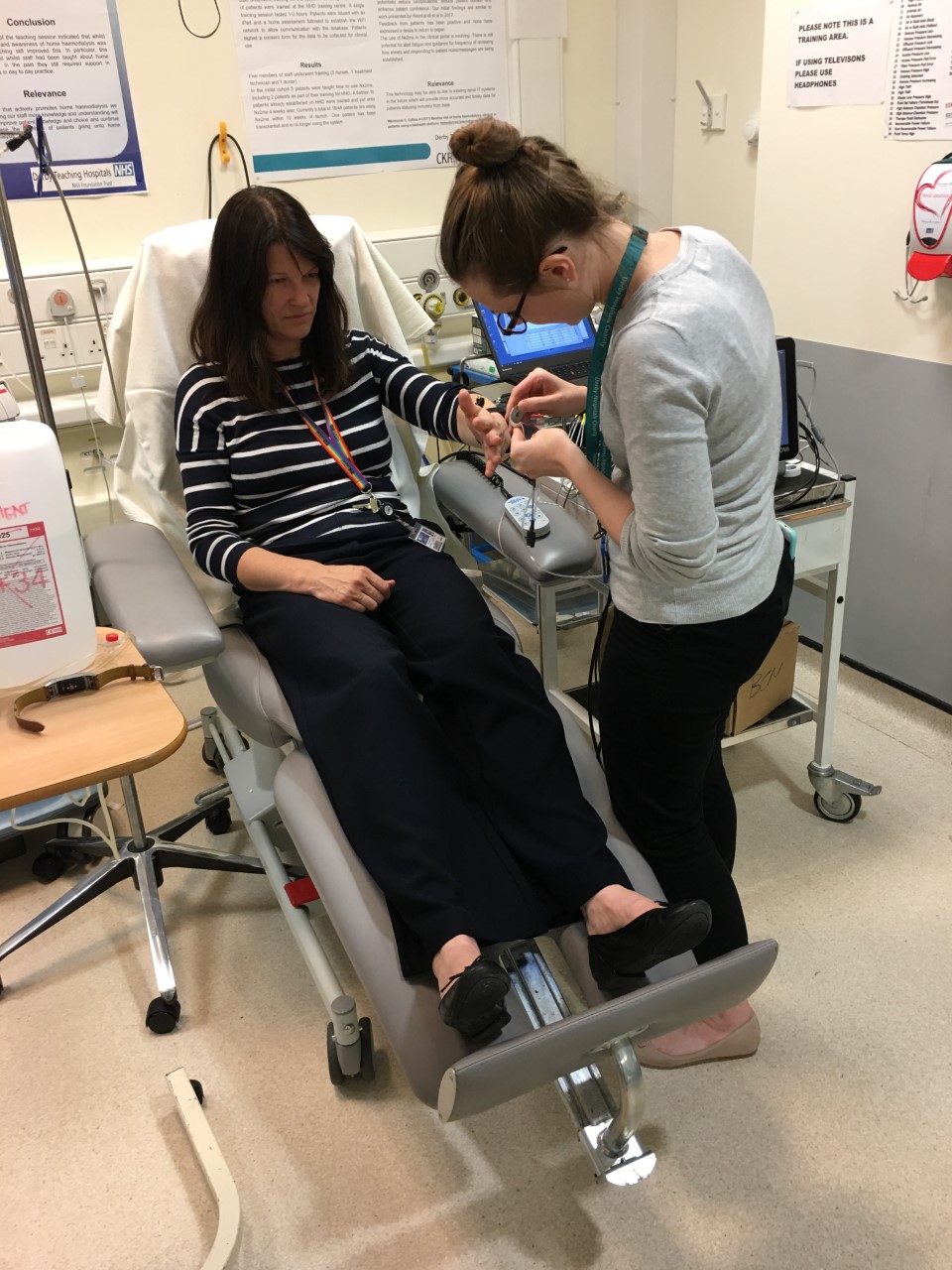
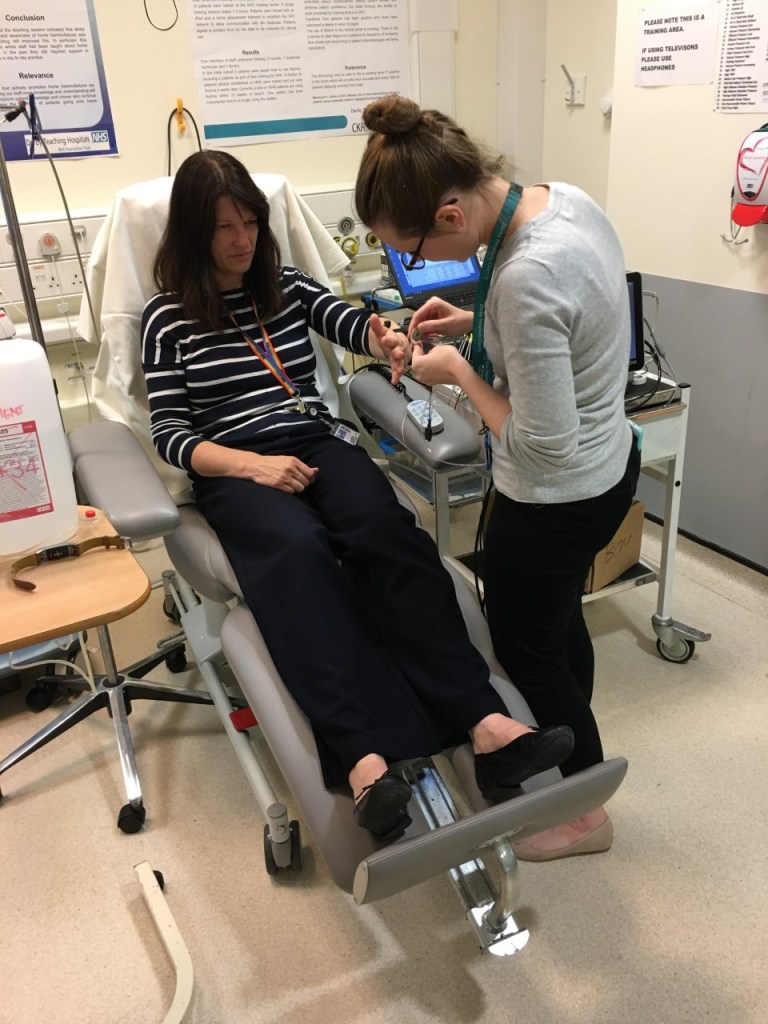
Dialysis patients face numerous challenges that significantly affect their quality of life and treatment outcomes, and these challenges underscore the importance of adopting a person-centered approach to symptom assessment and management. Consequently when we started the roll out of the new blood pressure monitoring hardware and software onto dialysis wards to begin clinical testing, patient experience was paramount to make the 4-hour monitoring sessions as seamless and comfortable as possible. Therefore, we practiced the procedure prior to roll out using volunteers from our staff to act as dialysis patients. Here’s my project manager Elke Louise Crump acting as a patient while we practice the order and method for a seamless dialysis monitoring session with a very early version of our monitoring tech.
About the iTrend Project
The iTREND project, an acronym for Intelligent Technologies for Renal Dialysis and Diagnostics, is an ambitious, long-term collaboration involving the Universities of Derby and Nottingham alongside the Royal Derby Hospital in the UK. This multidisciplinary research initiative aims to innovate and integrate advanced technologies into the renal dialysis process to enhance patient outcomes. Focusing on personalized treatment, it leverages novel sensor technologies and sophisticated data analysis to monitor and manage the health of patients with End-Stage Kidney Disease (ESKD) more effectively.
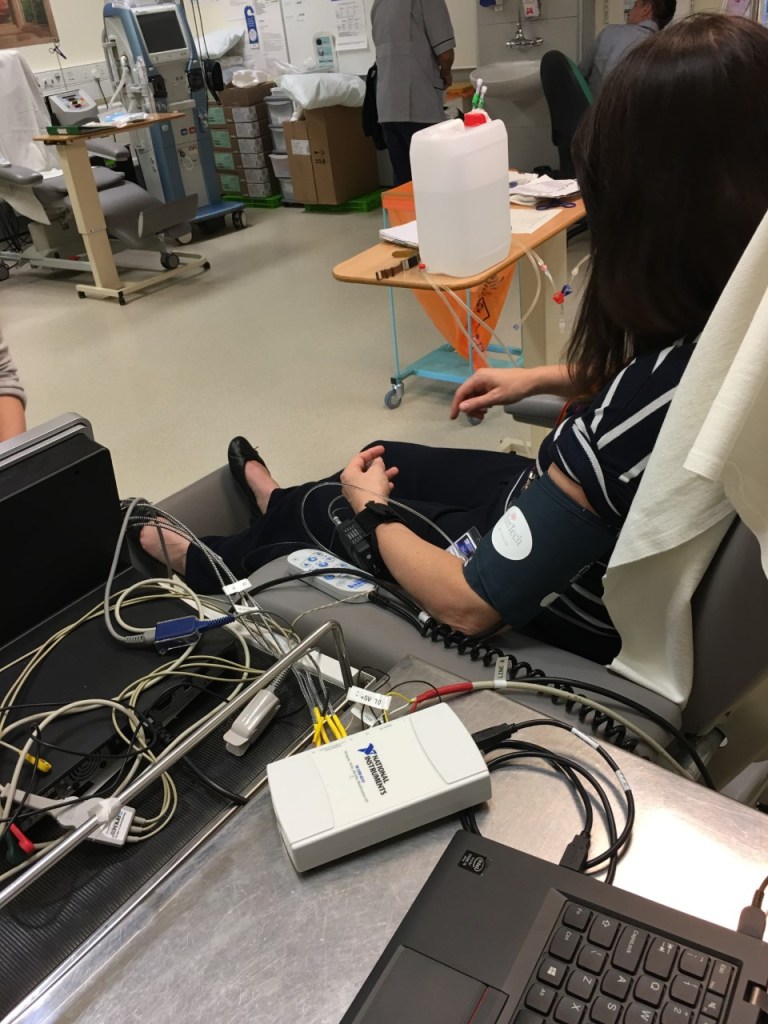
A key development under the iTREND framework is the novel technology for continuous, non-invasive blood pressure monitoring during dialysis. Such innovations not only facilitate precise monitoring of patients during dialysis but also introduce a significant shift from traditional methods, enhancing the scope for personalized interventions and improving clinical decision-making processes in real-time.
Overall, the iTREND project stands as a pioneering initiative in the field of renal health, pushing the boundaries of traditional dialysis through intelligent and adaptive technologies. By integrating real-time monitoring, data analysis, and personalized patient interventions, it aims to transform the landscape of renal healthcare, potentially setting new standards for treatment and patient management in the domain of kidney care.



 Prof Paul Stewart - University of Derby UK