
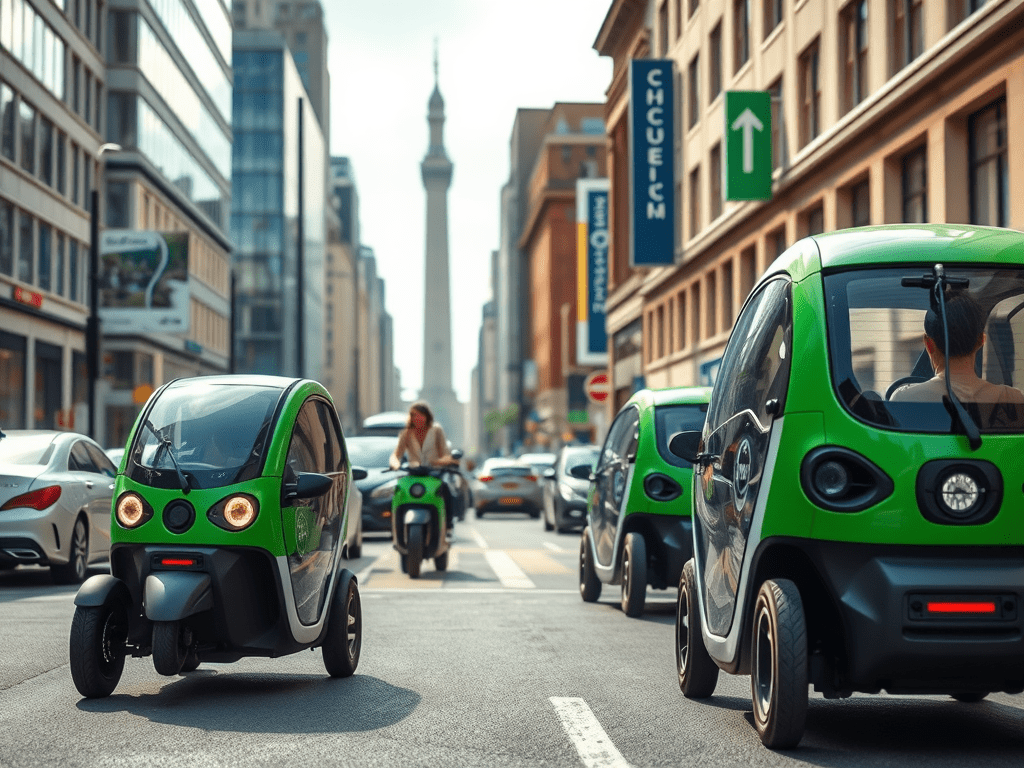
In the UK, micromobility encompasses lightweight, personal electric vehicles like e-bikes and e-scooters, which have different legal statuses than conventional cars. “Micro cars” are often defined as small, battery-electric vehicles (BEVs) or quadricycles that bridge the gap between traditional cars and smaller micromobility options.
Battery electric micro cars
Micro cars are typically small, four-wheeled electric vehicles that can be driven on UK roads with a valid license, unlike most micromobility options.
- Citroën Ami: A two-seater electric quadricycle with a top speed of 28 mph and an approximate range of 46 miles. According to Arnold Clark, it’s an affordable urban mobility solution but is sold left-hand drive only in the UK.
- Microlino: A modern version of the classic bubble car, this light quadricycle is being developed with an L6e category prototype for the UK market.
- Birò: A 100% electric, two-seater vehicle with a patented removable battery system. According to the Birò Cars UK website, it is designed for congested city use, where it can be parked in scooter spaces.
- Toyota FT-Me concept: A lightweight BEV prototype in the L6e category is being developed by a Toyota-led consortium for the UK.
Other forms of UK micromobility
Micromobility is a broader term for lightweight electric vehicles generally operating at speeds below 15 mph.
E-bikes and e-cargo bikes
Electric bicycles (e-bikes) are a major part of the UK’s micromobility market and are legal to use on roads and cycle paths, provided they meet specific “Electrically Assisted Pedal Cycle” (EAPC) requirements.
- Legal requirements for EAPCs:
- Fitted with pedals that assist propulsion.
- Maximum continuous power of 250 watts.
- Assistance cuts off at 15.5 mph.
- Rider must be aged 14 or over.
E-scooters
In contrast to e-bikes, privately owned e-scooters are currently illegal to use on public roads, cycle lanes, and pavements in the UK. They are classified as “powered transporters” and treated as motor vehicles, meaning they would require tax, insurance, and a license, which is not currently possible for these vehicles.
- Rental e-scooter trials: Legal use is limited to approved rental schemes operating in specific trial areas across England. The trials, which began in 2020, have been extended to inform future government regulation.
Micromobility regulations and future outlook
- Outdated laws: The UK’s current micromobility regulations have lagged behind the rapid growth of these new vehicle types.
- Forthcoming Transport Bill: The UK government has announced its intention to introduce a Transport Bill that would create a new legal category for low-speed, zero-emission vehicles (LZEVs), distinct from cycles and motor vehicles. This would provide much-needed clarity for the use of vehicles like e-scooters.
- Market opportunities: The growth of micromobility is driven by its potential to reduce urban congestion, improve air quality, and provide flexible, low-cost transport. For example, a 2021 University of Salford e-scooter trial report found that 38% of users connected with public transport.
Considerations for potential buyers
If you are considering a micromobility vehicle, your choice will depend heavily on your intended use and risk tolerance for potential future changes in legislation.
| Vehicle type | Best for… | Key regulations | Things to consider |
|---|---|---|---|
| Micro cars | City driving, especially in areas with driving restrictions or congestion charges. | Require a valid license. Drive legally on public roads. | Higher upfront cost than other micromobility options. |
| E-bikes | Commuting, longer trips, and riders who want a legal and established mode of electric transport. | Legal for use on public roads and cycle lanes as long as they meet EAPC requirements. | Can be slower for some trips and rely on pedal assist, not full motor power. |
| Rental e-scooters | Short, urban trips in cities where trials are running. | Only legal for use in designated trial zones and not on pavements. | Limited to trial areas; cannot be used privately on public roads. |
| Private e-scooters | Use on private land with permission from the landowner. | Currently illegal on public roads, cycle lanes, and pavements. Riders could face fines and penalty points. | High risk of fines and vehicle seizure if used in public spaces. |
Summary: Battery Electric Microcars & UK Micromobility
This report in pdf format synthesizes extensive research on microcars, micromobility, and electric vehicle (EV) infrastructure developments, highlighting technological trends, market growth, policy drivers, and historical evolution. The focus is on the technical, economic, and regulatory factors shaping the future of micro-mobility in urban environments, with an emphasis on UK and global markets.





 Prof Paul Stewart - University of Derby UK