
The MAAT Project was a Multi Partner EU funded project which ran from 2012-15 to investigate the structure, design, power and propulsion architecture for a large, persistent hydrogen/solar powered air vehicle.
Contract Type: Small or medium-scale focused research project
Project Cost: 5.09 million euro
Programme Acronym: FP7-TRANSPORT
Programme Type:7th FWP (Seventh Framework Programme)
Subprogramme Area: AAT.2011.6.2-1. Novel air transport vehicles, AAT.2011.6.3-1. The cruiser/feeder concept
Principal Investigator: Professor Paul Stewart (University of Lincoln)
Co-Investigator: Professor Chris Bingham (University of Lincoln)
2012-2015 Work Packages:
WP2. Overall System Design
WP4. Energy and Propulsive Systems (WP Leader)
WP5. Control and Telecommunications Systems
WP7. Cabins Cargos and Transfer Systems WP8. Concept Testing and Demonstration
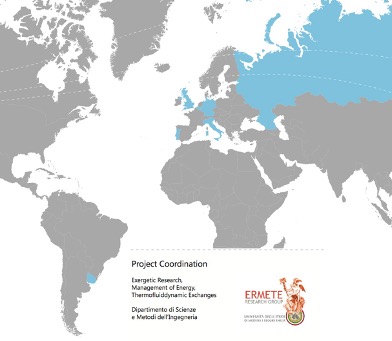
UNIVERSITY OF MODENA e REGGIO EMILIA, ITALY
EDL S.A.,
MONTEVIDEO, URUGUAY
UNIVERSITY OF LINCOLN, UNITED KINGDOM
SOUTHERN FEDERAL UNIVERSITY, RUSSIAN FEDERATION
AERO SEKUR S.P.A., APRILIA, ITALY
ENGYS LTD, UNITED KINGDOM
UNIVERSIDADE DA BEIRA INTERIOR, PORTUGAL
LOGISTIC NETWORK CONSULTANTS GMBH, GERMANY
VRIJE UNIVERSITEIT, BRUSSEL, BELGIUM
THE UNIVERSITY OF HERTFORDSHIRE, UNITED KINGDOM
POLITECNICO DI TORINO, ITALY
UNIVERSITA DI BOLOGNA, ITALY
The MAAT concept evolved from an earlier project:
PSICHE (Photovoltaic Stratospheric Isle for Conversion in Hydrogen as Energy vector)
Developed by the ERMETE (Exergetic Research Management of Energy, Thermofluid-dynamic Exchanges) research group of the University of Modena and Reggio Emilia.
PSICHE is a discoid stratospheric platform. Its photovoltaic roof, optimized for solar energy caption, produces hydrogen and oxygen by electrolysis
A feeder: MAM (Mobile Autonomous Module), transfers hydrogen, oxygen and water between the Earth’s surface and the platform
The overall transport system is composed of two elements:
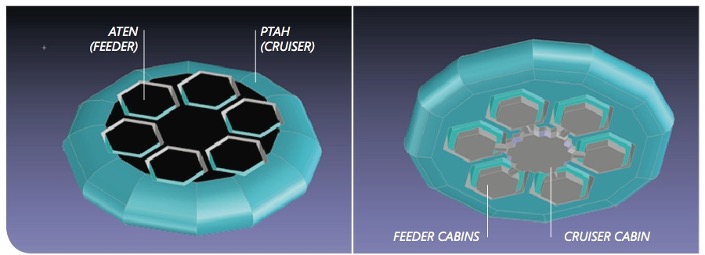
•One PTAH (Photovoltaic Transport Aerial High altitude system) is the central hexagonal airship cruiser ship
•Six ATENs (Aerial Transport Elevator Network) or feeder ships which connect to the PTAH.
From calculations performed on the PSICHE project, the MAAT dimensions are
•70 m in height with a diameter of approximately 350 m
•PTAH is equipped with electric propulsion, fed directly by photovoltaic modules, and by fuel cells during darkness
•Operational altitude of MAAT ~15-16 km
•On the basis of atmospheric models, could be extended to 13-17 km.
•The operative speed of the MAAT cruiser ~200 km/h in calm air.
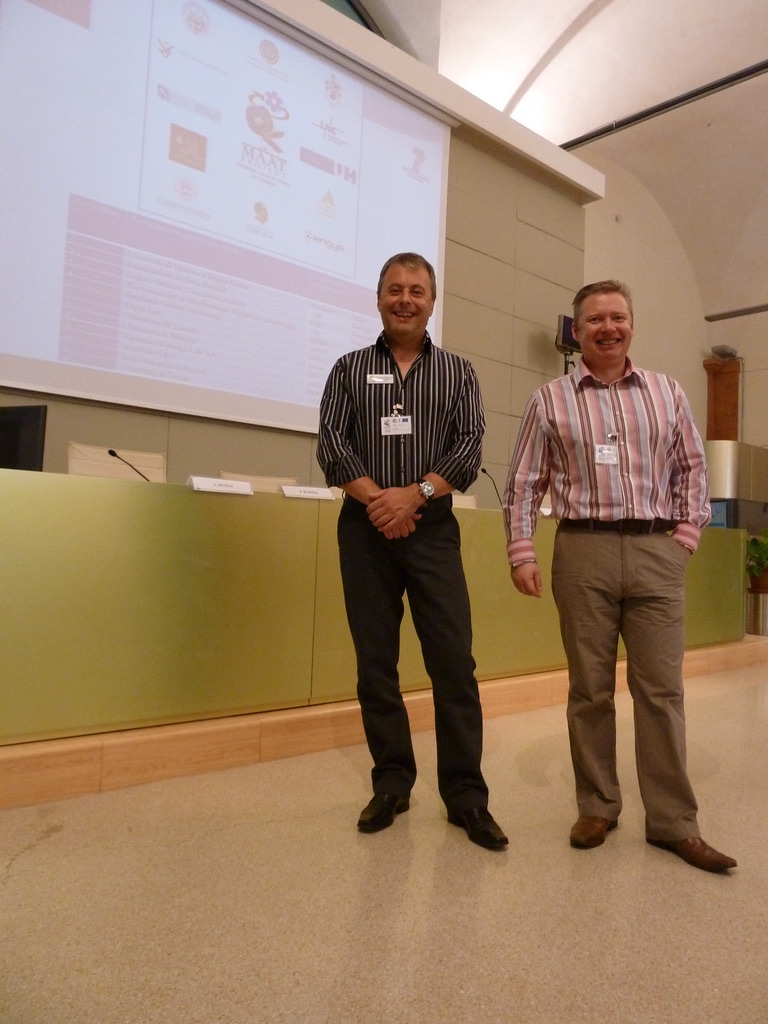
With Prof Chris Bingham at the MAAT Project launch at the University of Modena and Reggio Emilia It.
Publications
Smith T., Bingham C., Stewart P., Allarton R. and Stewart J., “Energy Harvesting and Power Network Architectures for the MAAT High Altitude Cruiser-Feeder Airship Concept”, Proceedings of the Institution of Mechanical Engineers, Part G: Journal of Aerospace Engineering April 2013 vol. 227 no. 4 586-599
Tim Smith, Michele Trancossi, Dean Vucinic, Chris Bingham and Paul Stewart, (2017) Primary and Albedo Solar Energy Sources for High Altitude Persistent Air Vehicle Operation, Energies 2017, 10(4), 573; doi:10.3390/en10040573





 Prof Paul Stewart - University of Derby UK
Leave a comment